Customer Acquisition
SEO for Dumpster Rental Companies: How to Rank in Google Maps and Local Search
A dumpster rental company improves its Google Maps and local search visibility by strengthening a handful of things at once: an accurate, active Google Business Profile, genuinely useful service-area pages, clear reviews, a website with real topical depth, and a path to quote that doesn't lose the visitor once they arrive.
None of these work especially well in isolation. A five-star Google profile attached to a thin, generic website won't hold a ranking. A well-built website with no reviews and an abandoned Business Profile won't show up in the map pack at all. The companies that rank consistently for searches like "dumpster rental near me" or "20 yard dumpster rental [city]" usually have most of these pieces working together, not one trick done perfectly.
How Local Search Works for Dumpster Rental Companies
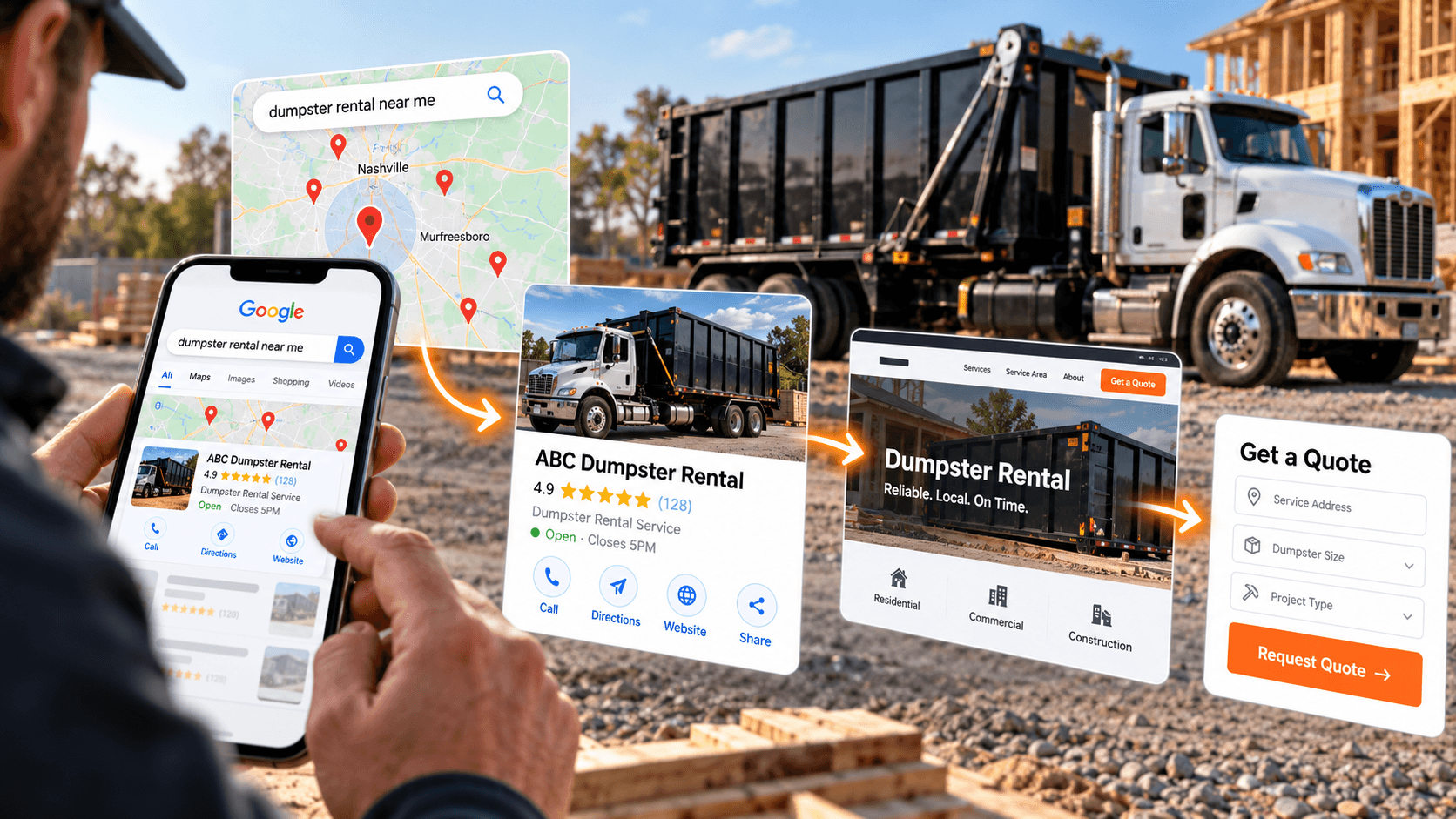
Dumpster rental customers find companies through three overlapping surfaces, and all three reward roughly the same underlying signals.
Google Maps and the Local Pack
The map pack — the local listings shown above organic results for a "near me" or city-plus-service search — is usually the first thing a customer sees. It's driven heavily by Google Business Profile completeness, relevance to the search, proximity, and review signals.
Organic search results
Below the map pack, a dumpster rental company's website competes on the usual fundamentals — relevant content, site structure, and authority — for searches that go beyond a simple "near me," like comparing dumpster sizes or researching a project before renting.
AI-generated and conversational recommendations
A newer surface is showing up alongside the first two: AI-generated summaries and conversational search tools that pull from much of the same underlying information — business details, reviews, and published content — to answer a question directly. More on that later in this guide.
The goal across all three isn't just "ranking" in the abstract — it's showing up for the specific, high-intent searches a real customer runs: dumpster rental near me, 20 yard dumpster rental [city], roll-off dumpster [city], construction dumpster rental [city].
Optimize Your Google Business Profile
Categories and business description
Choose the primary category that actually matches the business — a dumpster rental service category, for example — and add secondary categories only where they're genuinely accurate. The business description should plainly describe what's offered and where, not every city and keyword the business wants to rank for.
Service areas, hours, and phone number
Service areas should reflect where the company actually delivers, hours should be current, and the phone number should be the one that's actually answered — a profile pointing to a disconnected line or an old number undermines everything else on this list.
Photos and services
Real photos of the trucks, bins, and crew outperform stock imagery, and listing services clearly — roll-off sizes, same-day delivery, construction debris, residential cleanout — helps both customers and Google understand exactly what's offered.
Reviews and ongoing activity
A profile that collects reviews steadily and gets the occasional update — a new photo, a seasonal post — reads as active. A profile frozen in time since it was first created reads as exactly that.
None of this is complicated. It's mostly just easy to set up once and never touch again.
Build Strong City and Service-Area Pages
A dedicated page for each city or service area a company genuinely serves helps both customers and search engines understand exactly where that business operates — but only if the page says something real.
What makes a city page useful
- Specific service-area detail — the actual neighborhoods, zip codes, or landmarks covered, not just the city name
- The dumpster sizes actually available in that area
- Project types commonly served there — roofing, remodeling, cleanouts, construction
- Local delivery considerations — permit requirements, narrow streets, HOA rules, whatever is genuinely relevant
- A few honest FAQs specific to that market
- Internal links to relevant size and project pages
A city page with the city name swapped out forty times and nothing else changed is not a local SEO strategy — it's the same page wearing a different hat, and search engines have gotten reasonably good at noticing.
Create Content Around Dumpster Sizes and Project Types
Alongside city pages, dedicated content for dumpster sizes and project types gives customers the specific answer they're searching for and gives a site more to genuinely be found for.
- 10-yard, 20-yard, 30-yard, and 40-yard dumpster rental pages, each explaining what actually fits and who it's typically right for
- Roofing dumpster rental
- Construction and demolition dumpster rental
- Home cleanout dumpster rental
- Concrete and heavy debris
- Yard waste and landscaping cleanup
- Remodeling and renovation projects
This content works two ways: a homeowner trying to figure out whether they need a 20-yard or a 30-yard dumpster gets a real answer, and the site builds the kind of topical depth that search engines — and increasingly, AI tools summarizing a category — associate with a business that actually knows it.
Build a Strong Internal Linking Structure
None of the pages above do much good sitting in isolation. City pages, size pages, and project pages should all point to each other.
- City pages should link to the size and project pages relevant to that market
- Size and project pages should link back to the city pages they serve
- Resource articles — like this one — should link to the industry and service pages they're relevant to, the same way this guide links to our dumpster rental industry page
- No page should be orphaned — reachable only by typing the exact URL, with nothing else on the site pointing to it
A simple way to check this: pick five pages at random and see how many clicks it takes to reach each one from the homepage. If the honest answer is "I'm not sure that page is linked from anywhere," that's worth fixing before anything else on this list.
Reviews Matter for Both Trust and Local Visibility
Ask consistently, not occasionally
The companies that accumulate reviews steadily ask every customer, right after the job — not just the ones who seem happiest, and not in an occasional batch email.
Make it easy
A direct link sent by text right after a pickup outperforms a vague request to "leave us a review sometime" mentioned on-site.
Respond to reviews
Replying to reviews, including the occasional negative one, signals an active, attentive business — both to customers reading them and to the platforms hosting them.
Avoid gating or fake reviews
Filtering out unhappy customers before asking for a review, or generating reviews that aren't from real customers, violates most platforms' policies and tends to produce a review profile that doesn't hold up under scrutiny. Reviews earned the straightforward way hold up better — in rankings and in actual customer trust.
Reviews also do double duty: they influence visibility, and they're often the deciding factor for a customer choosing between two similar-looking companies in the map pack.
Citations and Local Business Consistency
A citation is simply the business's name, address, phone number, and service details appearing on another site — a directory, a chamber listing, an industry platform — and consistency across them matters more than quantity.
The practical version of this isn't submitting to five hundred directories; it's making sure the handful that actually matter — major directories, relevant local listings, industry-specific platforms — show the same name, phone number, and service area everywhere. Inconsistent information is a more common problem than having too few citations in the first place.
Backlinks Still Matter — But Relevance Matters More
Links from other sites still factor into how a dumpster rental company's website is evaluated, but a handful of relevant local and industry links tend to matter more than a large number of unrelated ones.
- Local partnerships — contractors, property managers, demolition crews, and other businesses that regularly need a dumpster on-site
- Trade associations and local business groups
- Local sponsorships — a youth sports team, a community event — that naturally come with a website mention
- Relevant, category-specific directories
- Content genuinely useful enough that other sites choose to reference it
Rental Growth Systems operates Rolloff Dumpster Finder, a directory built specifically for this category — listings there put a company in front of customers actively comparing dumpster rental options, and category-specific directories like it can support both discovery and referral visibility. They're one piece of a broader link and visibility picture, not a replacement for the rest of it.
Make the Website Easy to Convert From
Ranking for "dumpster rental near me" is useful. Ranking there with a site nobody wants to call is less useful.
- A phone number visible on every page, not buried in a footer
- A quote request that takes a minute, not five
- A mobile-friendly layout, since a large share of "near me" searches happen on a phone standing in a driveway
- Clear service-area information so a visitor isn't guessing whether the company covers their address
- Dumpster size clarity — what's available, roughly what it holds, phrased for someone who's never rented one before
- Trust signals — reviews, real photos, a real phone number — visible without scrolling far
Traffic that doesn't convert is a wasted opportunity, not a wasted search ranking — the ranking did its job. What happens on the page, and after, is a separate system.
How AI Search Changes Dumpster Rental SEO
SEO gets a lot less mysterious once it stops getting treated like a magic trick, and that's especially true for the AI-generated and conversational search experiences showing up alongside traditional results.
These tools tend to draw on the same signals described throughout this guide: clear, consistent business information; genuinely useful content that answers specific questions; and enough topical coverage to tell the system this is actually a dumpster rental company, not a general contractor who happens to mention dumpsters once.
- Clear entity signals — a consistent business name, services, and location across the website and major profiles
- Structured, specific content — pages that answer one clear question well, like what size dumpster fits a kitchen remodel, instead of a single vague services page
- Consistent business information everywhere it appears
- Topical coverage across sizes, project types, and service areas
- References and mentions from other credible local and industry sources
None of this guarantees a specific placement in any AI tool's answers — that's not something any SEO guide can honestly promise. What it does is put a business in the kind of shape these systems tend to draw from: accurate, specific, and genuinely useful, which is a reasonable goal independent of any particular platform.
What Should a Dumpster Rental Company Work on First?
Doing all of this at once isn't realistic for most owner-operated companies. A practical order:
- Fix the Google Business Profile — categories, hours, phone, service area, photos
- Make the core website pages strong — homepage, services, about, contact
- Build out the city and service-area pages that cover real markets
- Add dumpster size and project-type content
- Improve review volume and consistency
- Strengthen internal linking between all of the above
- Build citations and a handful of genuinely relevant backlinks
- Improve conversion and lead follow-up once the traffic starts arriving
- Expand content over time as capacity allows
The first few steps tend to move the needle fastest, since they're usually the most incomplete. The later ones compound over a longer timeline.
The Bottom Line
Dumpster rental SEO works best as a system, not a one-time website tweak. A strong Google Business Profile, genuinely useful city and project pages, consistent reviews, sensible internal linking, relevant citations and links, and a website that actually converts all reinforce each other — pull one piece out and the rest has to work harder to compensate.
This is the same idea behind Rental Growth Systems' Customer Acquisition Systems: visibility and conversion working together, not treated as separate problems. For a closer look at the acquisition side specifically for this category, see our guide on getting more dumpster rental leads.
Frequently Asked Questions
How long does SEO take for a dumpster rental company?
It varies, but local SEO improvements typically take a few months to show up meaningfully in rankings, while a complete and active Google Business Profile can influence visibility faster. That's why most companies work on several of these at once rather than waiting on one to finish before starting another.
How can a dumpster rental company rank higher in Google Maps?
By keeping the Google Business Profile accurate and complete, collecting reviews consistently, making sure business information matches across the web, and having a website with real, relevant content for the services and areas served. Proximity to the searcher also plays a role and isn't something a business can control directly.
Should dumpster rental companies create a page for every city they serve?
Only if there's something genuinely useful and specific to say about that city — service details, local considerations, relevant FAQs. A thin page with just the city name swapped in usually does more harm than good; a handful of strong, detailed pages tends to outperform a large number of thin ones.
Do Google reviews help dumpster rental SEO?
Yes, reviews are one of the factors that influence local search visibility, particularly in the map pack. They also directly affect whether a customer comparing several companies chooses to call, which makes them valuable for conversion as well as rankings.
Can SEO help a dumpster rental company get more leads without paid ads?
It can reduce reliance on paid ads over time, since organic and map-pack visibility don't carry a cost per click once established. It typically takes longer to build than a paid campaign, which is why many companies run both together — ads for near-term leads, SEO for visibility that compounds.
Related Industry
Growth Systems for Dumpster Rental Companies
See how acquisition, infrastructure, and customer value systems come together specifically for dumpster rental businesses.
View the Dumpster Rental PageRelated Resources
Customer Acquisition
How to Get More Dumpster Rental Leads
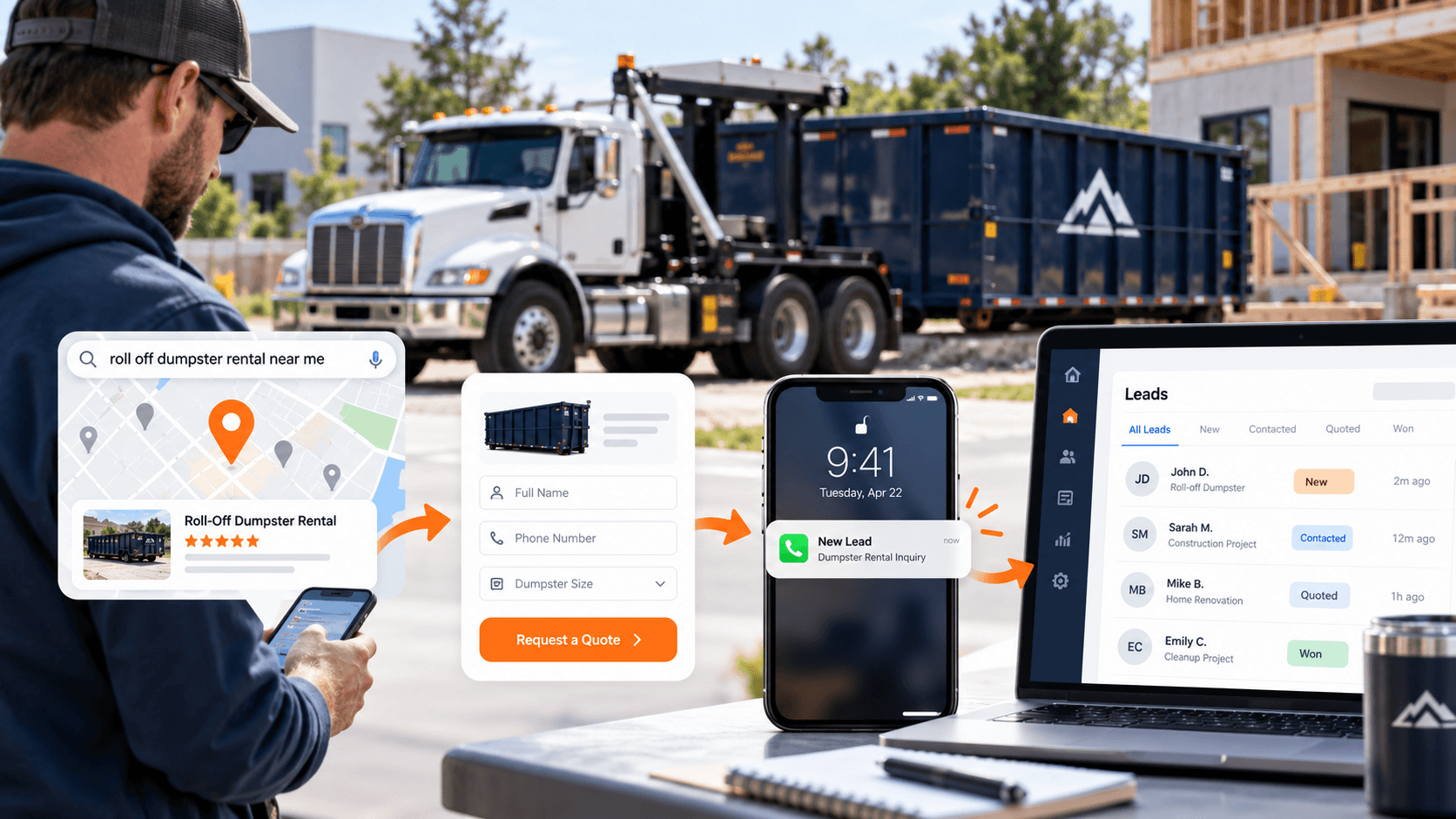
Local search visibility, directory listings, and fast follow-up are what turn dumpster rental searches into booked jobs.
Digital Infrastructure
How Rental Companies Can Improve Speed-to-Lead
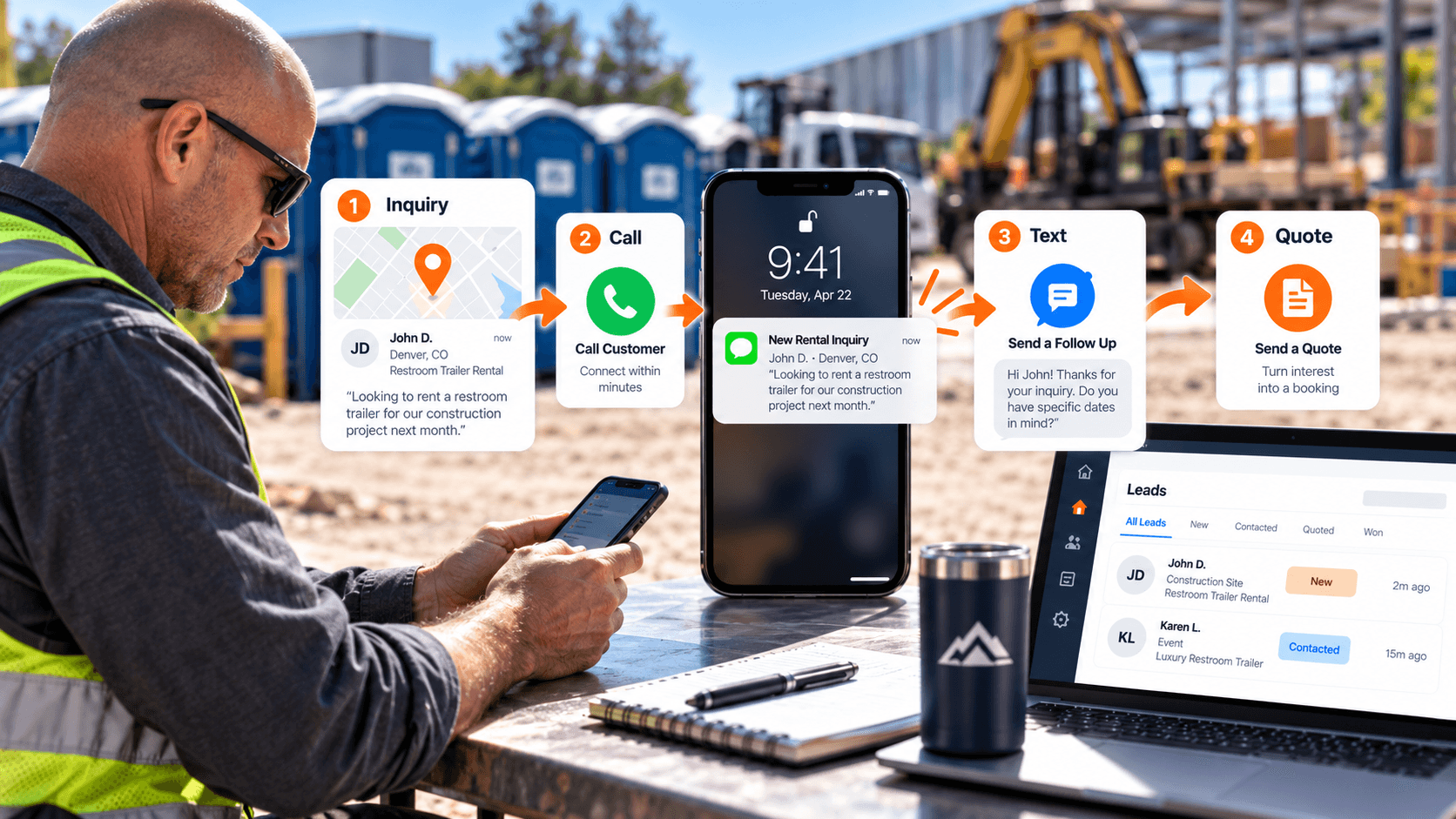
In commoditized rental categories, the company that responds first often wins the job. Here's how to shorten your response time.